


Q4 Packaging Crunch: Locking Down Capacity Before the Rush
Q4 can put added pressure on packaging teams. Holiday promotions, seasonal SKUs, product launches, year-end campaigns, and higher order volumes can all compete for production time, making September an important month for getting ahead.
For brand managers, Q4 packaging production planning can help reduce last-minute decisions and give packaging projects enough time to move through artwork approval, proofing, production, finishing, and delivery. The earlier those details are confirmed, the easier it is to keep your Q4 launch calendar moving.
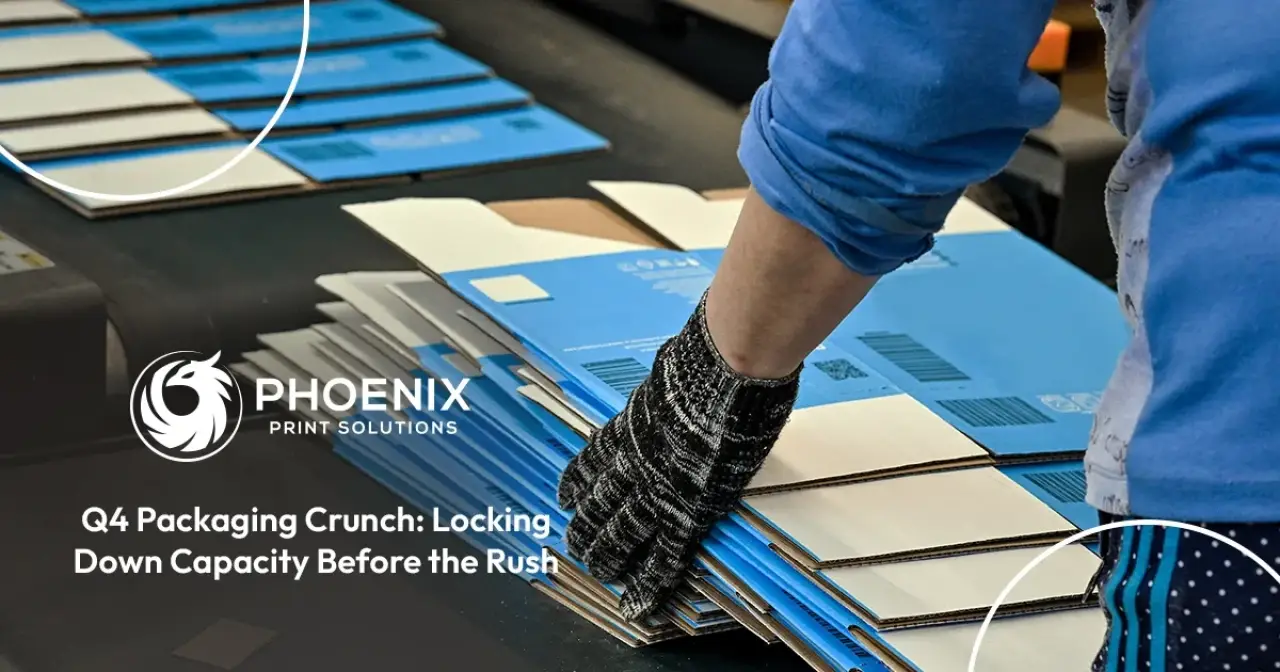
Why Q4 Packaging Planning Should Start in September
Packaging projects have several steps between an initial order and finished materials arriving at your facility. Artwork needs to be approved, materials confirmed, proofs reviewed, production scheduled, finishing completed, and final pieces inspected and shipped.
During a busy Q4, changes at any of those stages can affect the rest of the schedule. A delayed approval or last-minute quantity adjustment may leave less flexibility later in the process. Planning in September gives your team an opportunity to address those details before October and November deadlines begin stacking up.
What to Lock Down Before the Q4 Rush
You don't necessarily need every Q4 detail finalized at once. However, confirming the major pieces of your packaging program early can give your internal team and print partner a clearer production roadmap.
Forecast Your Packaging Volumes
Start by estimating how much packaging you'll need across your Q4 campaigns, product lines, and SKUs. Review previous sales, planned promotions, seasonal demand, upcoming launches, and inventory already on hand.
Your forecast doesn't have to predict every order perfectly. The goal is to identify larger production needs early enough to make informed decisions about quantities, run sizes, and timing. This is particularly important for brands managing multiple SKUs, where maintaining brand consistency at scale can become more challenging as different packaging projects move through production at different times.
Identify Your Firm Launch and Delivery Dates
Work backward from the dates that matter most. If packaging needs to be at a fulfillment center, production facility, retailer, or other destination by a certain date, your print schedule needs to account for every step that comes before delivery.
Build in time for artwork, approvals, proofing, production, finishing, quality checks, and transportation. Leaving some flexibility in the schedule can also make it easier to respond if a file needs to be corrected or another production detail changes.
Confirm Materials, Formats, and Finishes
Q4 isn't the ideal time to discover that an important material, finish, or packaging specification hasn't been finalized. Confirm your substrates, dimensions, die-cuts, coatings, adhesives, and other production requirements as early as possible.
If you're launching a seasonal product or refreshing existing packaging, make sure those changes are communicated before the job is ready for production. Even small specification changes can affect estimating, proofing, setup, and scheduling.
Decide Which Projects Need Production Priority
Not every Q4 packaging project carries the same deadline or business impact. A major holiday launch may need to take priority over a routine replenishment order, while a high-volume core SKU may require a different production strategy than a limited seasonal version.
Rank projects by launch date, inventory needs, volume, and flexibility. This gives your team a clearer picture of which jobs need to be committed first and which may have more room in the schedule.
Don't Let Artwork Delays Disrupt Your Production Calendar
Production capacity isn't the only factor that can slow down a packaging project. Sometimes the press is ready, but the artwork isn't.
Packaging files may pass between brand managers, designers, compliance teams, procurement teams, and printers before they're approved. When multiple versions of the same artwork are stored in different folders or shared through long email chains, it becomes easier for an outdated file to enter the workflow.
Make Approved Artwork Easy to Find
A centralized Digital Asset Management (DAM) system gives your team one place to organize approved packaging files, logos, brand assets, templates, and other production materials.
Instead of searching for the latest file every time a SKU needs to be printed, teams can quickly retrieve the approved version. That can be particularly valuable during Q4 when multiple packaging projects and reorders may be moving at the same time.
Use Version Control to Reduce Reprint Risk
An outdated ingredient panel, old logo, incorrect promotional message, or previous packaging design can create more than a minor inconvenience. If the wrong version makes it through production, the resulting reprint can affect both your budget and your launch schedule.
Version control helps establish a clear source of truth for production-ready artwork. Combined with an approval process, it can reduce uncertainty about which file should go to press and help teams catch changes before materials are produced.
Prepare Repeat Jobs Before They're Urgent
Reorders can move more efficiently when approved artwork and specifications are already organized. Before Q4 gets busy, review the packaging and labels you're likely to reorder and make sure the current files, quantities, and production specifications are easy to access.
This is also a good time to identify SKUs that may need an artwork update later in the quarter. Planning those changes ahead of time can help prevent a routine replenishment order from turning into a last-minute redesign.
Build Flexibility Into Your Q4 Packaging Strategy
Even with careful forecasting, Q4 demand can change. A promotion may outperform expectations, a retailer may request additional inventory, or a seasonal SKU may need another run.
Building some flexibility into your packaging strategy can make those changes easier to manage.
Consider Run Size Alongside Your Timeline
The most cost-effective production method can depend on quantity, materials, finishing requirements, and turnaround time. Understanding the differences between short-run digital and offset printing can help when deciding how to approach a large planned run versus a smaller replenishment order needed later in the quarter.
Discussing anticipated quantities with your print partner early can help determine how to approach initial runs and possible reorders without treating every job the same way.
Plan for Seasonal and Limited-Edition SKUs
Seasonal packaging often has a shorter useful life than evergreen packaging. Ordering too little can create inventory problems during an important sales period, while ordering too much can leave you with materials that can't be used once the promotion ends.
Consider expected demand, the length of the promotion, reorder timing, and production method when deciding how much seasonal packaging to produce. The right approach balances availability with the risk of excess inventory.
Keep Quality Control in the Schedule
A busy production calendar shouldn't mean skipping important quality checks. Color consistency, registration, finishing, dimensions, and other packaging specifications still need to meet your standards, even when deadlines are tight.
Building quality control into the original production schedule and maintaining an efficient label printing production workflow can help catch defects, reduce rework, and maintain consistency before finished materials reach a filling line, fulfillment center, retailer, or customer.
Avoid the Cost of Last-Minute Q4 Reprints
A reprint costs more than the materials being replaced. It can also affect production schedules, freight costs, inventory availability, and launch dates. When a correction has to move quickly, it may compete with other jobs already scheduled for the quarter.
Before approving Q4 packaging, confirm that the artwork, product information, branding, quantities, and specifications are current. Creating clear approval checkpoints can help catch errors while they're still easier to correct.
This is where Q4 packaging production planning and DAM work together. Planning reserves time for the job, while organized, version-controlled assets help make sure the correct job reaches production.
Get Your Q4 Packaging Projects on the Calendar
September is an opportunity to get ahead of Q4 packaging demands before holiday campaigns and year-end deadlines begin piling up. Forecasting quantities, confirming specifications, organizing approved artwork, and planning for possible reorders can give your team a clearer path through the busiest months of the year.
Phoenix Print Solutions provides custom packaging and sleeve production, label printing, Digital Asset Management, and other print solutions to help brands manage projects from approved artwork through production. Contact us today to discuss your Q4 packaging needs and upcoming production schedule.